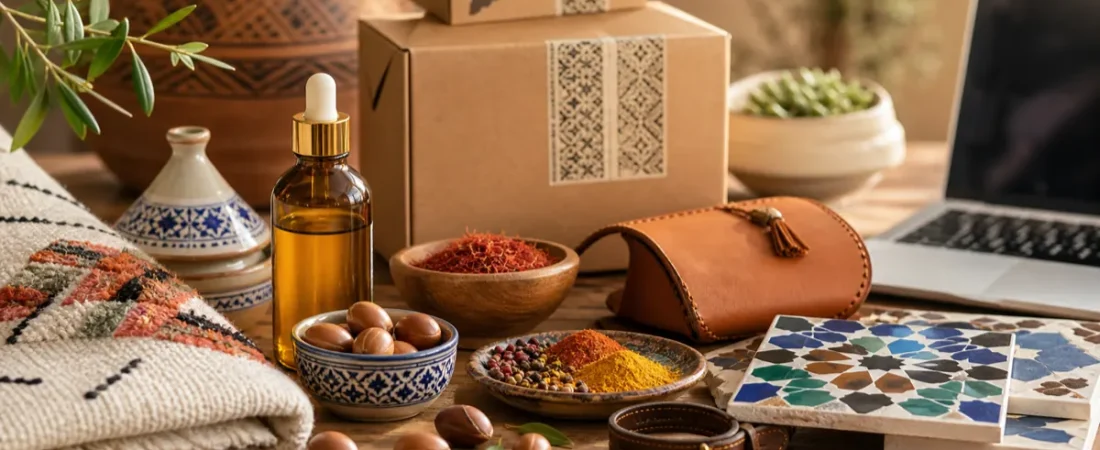
Morocco already has products, materials and craftsmanship that many countries would love to have. I also made a full video on this topic, which you can watch here: Business in Morocco: Moroccan products that could become global brands.
In this article, we’ll go deeper into one simple idea: Morocco does not necessarily lack products or talent. What is often missing is stronger branding, better packaging, better storytelling, online selling, export strategy and the ability to turn local know-how into strong Moroccan brands.
When people talk about business in Morocco, they often think about real estate, tourism, restaurants, services, transport or digital work. All of these sectors matter. But one of Morocco’s biggest economic opportunities is already visible in everyday life: argan oil, Moroccan rugs, textiles, leather, zellige, tadelakt, saffron, spices, scents, natural products and traditional craftsmanship.
The problem is that many Moroccan products are still sold as simple local items, while they could become real brands with international value. They could be sold in Morocco, Europe, North America, the Middle East and to the Moroccan diaspora around the world.
The real question is not only: “What can Morocco produce?” Morocco already produces many things. The deeper question is: “How can Moroccan products be better presented, better marketed, better sold and better protected so that more of the value stays in Moroccan hands?”
Morocco does not lack products. It often lacks value capture.
Morocco has a major advantage: it already has a strong identity. When foreigners think about Morocco, they often think about colors, textures, smells, architecture, handmade objects, spices, oils, rugs, zellige tiles, riads, souks and a specific sense of warmth and authenticity.
That cultural capital already exists. It does not need to be invented. It needs to be better structured, better explained and better sold.
This is where many Moroccan products lose value. The product may be good, but the photography is weak. The craftsmanship may be real, but the packaging does not inspire trust. The story may be powerful, but nobody tells it. The price may be fair, but the customer does not understand why they should pay more.
In modern commerce, a product alone is not enough. A customer also buys trust, identity, consistency, presentation, emotion, service and proof of quality. This is even more important when selling Moroccan products online or trying to export them internationally.
A product made in Morocco can be excellent and still be underpriced if it is not positioned properly. On the other hand, the same type of product can be sold at a much higher value when it is presented through a strong brand, a clean website, professional photos, good packaging and a clear story.
Why marketing matters for Moroccan products
Marketing is sometimes misunderstood. Some people think marketing means exaggerating, manipulating or selling something empty. But good marketing does not create fake value. Good marketing reveals real value.
If a cooperative produces high-quality argan oil but sells it in a basic bottle with a weak label and no clear explanation, it may be forced to compete mainly on price. Meanwhile, another company can buy a similar product, place it in premium packaging, tell a story about natural beauty and Moroccan heritage, and sell it at a much higher price.
This is the real issue. Morocco produces. But others sometimes know how to present, package, brand and sell better.
That does not mean Moroccans cannot do it. It means there is a huge opportunity for entrepreneurs, artisans, cooperatives, designers, marketers and members of the Moroccan diaspora to build stronger brands around products that already exist.
Creating a Moroccan brand does not mean betraying tradition. It can be a way to protect it, make it more visible and allow the people behind the product to be better paid.
1. Argan oil, olive oil, prickly pear seed oil and Moroccan natural products
Natural oils are one of the clearest examples of Morocco’s potential. Argan oil is already known worldwide. It is associated with beauty, skincare, haircare, natural cosmetics and Morocco. Alongside argan oil, there is also olive oil, prickly pear seed oil, natural soaps, plant-based products, cosmetic ingredients and wellness products.
These products are strong because they fit global consumer demand. Many people are looking for natural, authentic and traceable products with a real origin. Morocco has a powerful position here, but only if quality, consistency and trust are taken seriously.
The opportunity is not just to sell a bottle of oil. The opportunity is to create a brand around Moroccan natural products.
That means working on several things: quality control, origin, packaging, photography, product descriptions, customer education, clear usage instructions, reviews, delivery and customer service.
Someone who wants to build a business around argan oil should not only ask: “Can I sell argan oil?” A better question is: “Who am I selling to? What is my positioning? What problem does this product solve? Why should someone trust my brand instead of buying from another seller?”
For example, a brand could focus on skincare, haircare, premium natural cosmetics, minimalist beauty, traditional Moroccan ingredients or ethical sourcing. Each angle speaks to a different customer.
The same applies to olive oil, prickly pear seed oil and other natural products. The Moroccan origin can be a strong advantage, but it must be supported by a serious brand experience.
2. Moroccan rugs, textiles, leather and handmade products
Moroccan rugs, textiles, leather goods, traditional clothing, modernized caftans, handmade bags, babouches, decorative objects and artisanal products have huge potential. The Moroccan aesthetic is already loved around the world, especially in interior design, fashion and lifestyle.
A Moroccan rug is not just a rug. It can represent a region, a tribe, a technique, a material, a story, a family tradition and hours of handmade work. But if none of this is explained, many customers will compare it to a factory-made rug and judge mainly by price.
This is where branding changes everything.
A rug shown quickly in a crowded shop does not create the same perceived value as a rug photographed in a beautiful interior, with clear dimensions, material details, origin, care instructions and a story about the artisan or region behind it.
The same logic applies to leather bags, handmade accessories, clothing, decorative objects and Moroccan textiles. These products can become premium if the brand builds a clear universe around them.
For Moroccan entrepreneurs and members of the diaspora, this is a real opportunity. The diaspora often understands European, North American or Gulf markets better. They know what customers expect in terms of presentation, payment, delivery, product pages, customer support and trust.
At the same time, people based in Morocco are closer to workshops, artisans, materials and production. When both worlds work together, the potential becomes much stronger.
A good Moroccan textile or handmade brand should not only sell “traditional products.” It should sell a clear identity, a specific style, reliable quality and an experience that makes the customer feel confident.
3. Zellige, tadelakt and traditional Moroccan materials
Zellige, tadelakt, handmade tiles, traditional finishes, decorative materials, sinks, tables, wall finishes and Moroccan-inspired interior design products have a different kind of potential. They speak to architects, interior designers, homeowners, hotels, restaurants, riad owners and people who want to bring a Moroccan atmosphere into a space.
Zellige is not just a tile. It is a visual signature. It immediately gives depth, texture and identity to a room. Tadelakt is not just a wall finish. It is associated with Moroccan bathrooms, hammams, riads and a timeless sense of craftsmanship.
In many countries, Moroccan design is seen as warm, elegant, handmade and premium. But again, the challenge is not just production. The challenge is structure.
If someone wants to sell zellige or tadelakt internationally, they need clear product information: sizes, colors, technical details, delivery times, installation guidance, samples, care instructions, photos, references, project examples and reliable communication.
This is especially important because these products are often connected to construction or renovation. Customers need trust before placing an order. Architects and designers need clarity. Importers need consistency.
A Moroccan entrepreneur in this field is not only selling a product. They are selling a design solution, a mood, a result and a level of trust.
This is where Morocco can capture more value. Instead of being only the place where the material comes from, Morocco can become the home of strong design and interior brands inspired by Moroccan craftsmanship.
4. Saffron, spices, roses, perfumes and Moroccan scents
Morocco also has a powerful world of sensory products: saffron, spices, rose products, floral waters, perfumes, incense, scented oils, plants, traditional blends and local food products.
These products are powerful because they speak directly to the senses: smell, taste, color, memory, cooking, home, wellbeing and identity.
A Moroccan spice blend is not just a spice blend. It can be connected to family recipes, regional cuisine, Ramadan tables, traditional dishes, memories of Morocco and the warmth of Moroccan hospitality.
Saffron can be positioned around premium cooking, refined taste, regional identity and authenticity. Rose products can be positioned around beauty, wellness, fragrance and tradition. Moroccan scents can become candles, oils, home fragrances, soaps, perfumes or gift boxes.
But many of these products are still sold too simply. They lack packaging, product education, recipes, usage ideas, origin stories, brand consistency and strong visuals.
A spice brand, for example, should not only sell spices. It can teach people how to use them. It can offer recipes, cooking guides, gift boxes, seasonal collections and content around Moroccan cuisine.
A rose-based brand can explain the uses of rose water, the sensory experience, the origin and the rituals around it. A saffron brand can explain how to recognize quality, how to store it and how to use it properly.
The goal is not to invent a fake story. The goal is to make the real story visible.
E-commerce can help Moroccan products reach new markets
For a long time, selling Moroccan products often meant depending on a physical shop, a souk, a reseller, a tourist area, a contact or an intermediary. Today, e-commerce can help Moroccan products reach customers directly, whether in Morocco or abroad.
But selling online is not simply creating an Instagram page and waiting for orders. A serious online business needs a clear storefront, good product pages, clean photos, payment options, delivery information, customer support and a trustworthy brand experience.
If you want to test an online store idea around a Moroccan product, Shopify can be a simple way to create a professional storefront, add your products, manage orders, handle payments and start selling without coding. Shopify also offers a free trial, so you can test the platform before committing. You can try Shopify here: Shopify free trial.
Of course, the tool itself does not guarantee success. It does not replace a good product, strong photos, clear positioning, reliable logistics or good customer service. But it can help someone move from an idea to a structured online store without needing to build everything from scratch.
For Moroccan products, this matters because presentation is part of the value. A serious website can make a local product feel more trustworthy, more premium and more export-ready.
Building a Moroccan brand does not mean losing authenticity
This is an important point. Some people worry that branding, packaging and e-commerce will make traditional Moroccan products lose their soul. But better presentation does not have to mean less authenticity.
A traditional product can remain authentic while being explained more clearly. Handmade products can be sold through a modern brand without losing their identity. A Moroccan artisan can be respected and better valued through a stronger commercial structure.
The real risk is not that Moroccan products become brands. The real risk is that other people build brands around Moroccan products while Moroccans remain mainly suppliers.
If Morocco does not tell its own story, someone else will tell it. If Moroccan entrepreneurs do not learn how to package, market and sell their own products, others will continue to capture a large part of the value.
Tradition does not need to be locked in the past. It can become an economic strength when it is treated with respect, quality and intelligence.
What entrepreneurs should work on before selling Moroccan products
Before launching a business around Moroccan products, it is important to avoid one common mistake: focusing only on the product.
Many projects fail not because the product is bad, but because everything around the product is weak.
The first thing to work on is quality. If the quality changes from one order to another, customers lose trust. Then comes consistency: production, stock, delivery, suppliers and communication must be reliable.
Presentation also matters. Photos should be clean. Product descriptions should be clear. Packaging should feel serious. The website should inspire confidence. A customer who does not know the seller needs strong trust signals before paying.
Storytelling matters too, but it must remain honest. The goal is not to invent a romantic story. The goal is to explain origin, material, process, region, use, difference and value.
Customer service and logistics are also essential. A beautiful product can be ruined by poor delivery, slow replies, unclear delays or bad packaging. In e-commerce, trust is built before the purchase, but also after the purchase.
Opportunities for Moroccans, expats and the Moroccan diaspora
The opportunity around Moroccan products is not only for artisans and producers. It is also for entrepreneurs, content creators, designers, photographers, developers, marketers, logistics providers, translators and members of the Moroccan diaspora.
A Moroccan living in Europe or North America may understand the expectations of foreign customers better. They may know how people search online, how they compare products, what kind of packaging they expect, what payment methods they trust and what objections they have.
Someone based in Morocco may be closer to the producers, workshops, materials and field reality. These two profiles can complement each other.
There are also many business opportunities around the products themselves: product photography, e-commerce store creation, packaging design, branding, translation, ads, logistics, export support, artisan training, social media content and customer service.
Business in Morocco does not only mean selling a product. It can also mean improving the entire ecosystem around the product.
Morocco should keep more of the value it creates
When a Moroccan product is bought cheaply, transformed elsewhere, packaged elsewhere, marketed elsewhere and sold at a much higher price under another brand, Morocco captures only part of the value. This is not always intentional. But it shows where the opportunity is.
To keep more value, Morocco needs more skills in quality control, branding, design, digital marketing, e-commerce, export, languages, customer service, logistics, regulation and trust-building.
This will not happen overnight. But every serious Moroccan brand, every well-presented product, every better-supported artisan and every professional online store can contribute to that change.
Morocco already has valuable products in its hands. The next step is to turn them into sustainable businesses and brands that can travel without losing their identity.
Related guides on Living in Morocco
If you are thinking about business, relocation or investment in Morocco, you may also find these guides useful:
- Living in Morocco as an expat
- Buying property in Morocco
- How to choose the best city to live in Morocco
FAQ: Business in Morocco, Moroccan products and e-commerce
What are the best Moroccan products to sell online?
Some of the most promising Moroccan products to sell online include argan oil, natural skincare products, Moroccan rugs, handmade objects, spices, saffron, rose products, leather goods, textiles, zellige-inspired decor and local food products. The potential depends on quality, branding, packaging, photography, logistics and trust.
Can I start a Moroccan product brand without owning a factory?
Yes. Many brands start by working with artisans, cooperatives, workshops or local suppliers. You do not always need to own a factory at the beginning. What matters is building reliable relationships, controlling quality, creating a clear brand identity and being transparent with customers.
Why are Moroccan products sometimes undervalued?
Moroccan products are sometimes undervalued because they are sold without strong branding, professional packaging, good photos, clear storytelling, customer education or reliable distribution. A product can be excellent, but if the customer does not understand its value, they will compare it mainly on price.
Is e-commerce a good opportunity in Morocco?
E-commerce can be a strong opportunity in Morocco, but it is not a magic solution. You need a good product, a clear niche, professional presentation, reliable logistics, customer support and a way to attract traffic. A website can help you test and structure your business, but the fundamentals still matter.
How can Moroccan artisans sell their products better?
Moroccan artisans can sell better by improving photos, packaging, product descriptions, storytelling, pricing, delivery and customer communication. They can also work with entrepreneurs, designers or marketers who understand online selling and can help them reach new markets.
Conclusion: Morocco already has value. Now it must learn to present it better.
Morocco is not starting from zero. It already has strong products, powerful materials, skilled artisans, a recognizable identity and a cultural image that attracts people around the world.
But having a good product is no longer enough. It must be presented, explained, packaged, sold, delivered and protected properly.
The real challenge is not only to produce more. The real challenge is to value better what already exists.
Morocco knows how to produce. The question now is: can it learn how to sell its value better?