
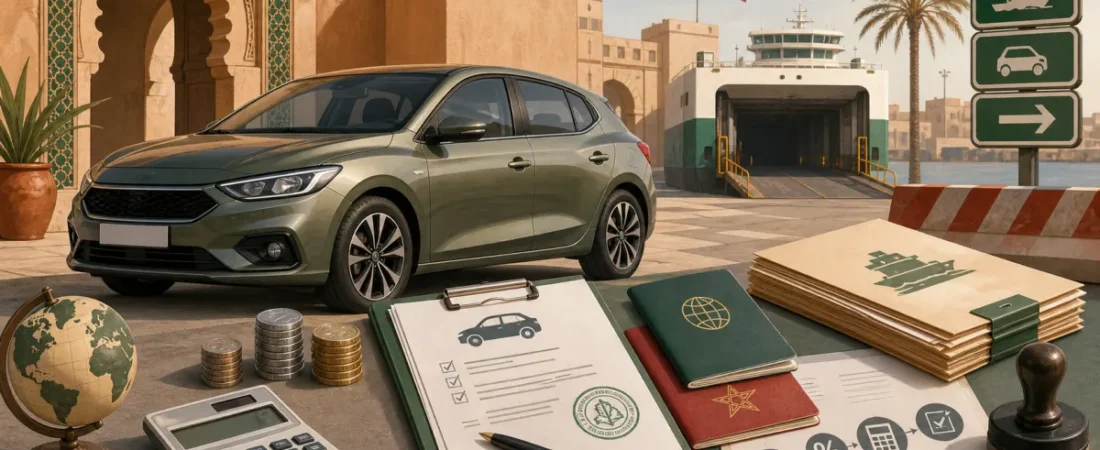
Importing a car to Morocco can look simple at first. You find a vehicle abroad, compare the price with cars in Morocco, and imagine that the difference will save you money. But the real cost is not only the purchase price in France, Spain, Belgium, Germany, the UK or another country. The real question is what the car will cost once you include customs fees, VAT, paperwork, temporary admission rules, registration, insurance, time, and possible delays.
This guide is designed for expats, future residents, retirees, Moroccans living abroad, and anyone wondering whether it is better to import a car to Morocco or buy one locally. The goal is not to scare you. In some cases, bringing a car to Morocco can make sense. But it should be a calculated decision, not an emotional one based only on a cheaper price abroad.
Importing a Car to Morocco: What Does It Actually Mean?
When people say they want to import a car to Morocco, they often mix several different situations. This is where confusion starts.
The first situation is simply entering Morocco with a foreign-registered car for a temporary stay. This is common for tourists, Moroccans living abroad, and people visiting family during the summer. The car keeps its foreign plates and is not registered in Morocco.
The second situation is driving under temporary admission. This means the vehicle can circulate in Morocco for a limited period under a customs status that does not make it permanently Moroccan. The vehicle is allowed into the country, but it is not cleared through customs yet.
The third situation is permanent importation. This is when the vehicle is officially cleared through Moroccan customs. Duties, taxes and fees are calculated, paid if applicable, and the car can move toward Moroccan registration.
The final step is registration in Morocco. This is when the vehicle receives Moroccan plates, Moroccan insurance and becomes part of the local system. Customs clearance and registration are connected, but they are not the same thing.
Understanding these differences matters because the rules, deadlines, costs and risks are not the same.
Temporary Admission: Driving a Foreign Car in Morocco Without Importing It Permanently
Temporary admission is the system that may allow you to drive a foreign car in Morocco for a limited period without permanently importing it. It is especially relevant for people who live abroad and come to Morocco by ferry or road for holidays, family visits or a temporary stay.
In simple terms, the car enters Morocco under a temporary customs status. You can use it legally during the allowed period, but you must respect the deadline and the conditions attached to that status.
This is not the same as bringing a foreign car into Morocco forever. A foreign car cannot simply stay indefinitely because the owner wants to keep it there. If the temporary admission period is exceeded or the rules are not respected, the situation can become complicated and expensive.
Rules can change, and individual situations can differ. Before planning a long stay with a foreign car in Morocco, always verify the latest temporary admission rules with Moroccan customs or a qualified professional. This is especially important if you are moving to Morocco, spending several months there, or planning to leave the vehicle behind.
Who Can Import or Clear a Car Through Customs in Morocco?
Different profiles may consider vehicle customs clearance in Morocco.
Expats moving to Morocco may want to bring their own car because they already trust it, know its maintenance history, or prefer a model that is expensive or hard to find locally.
Moroccans living abroad, often referred to in French as MRE, may want to bring a vehicle when returning to Morocco, retiring, or spending more time in the country.
Retirees may also compare importing a familiar car with buying a local vehicle after settling in Morocco.
Future residents sometimes think about buying a car abroad before moving because prices can look more attractive in Europe. But this is exactly where a full calculation is necessary.
The situation may differ depending on residency status, vehicle ownership, vehicle age, engine type, customs valuation, and whether the person qualifies for any special treatment. That is why there is no universal answer that works for everyone.
Documents Usually Needed to Import a Car to Morocco
The exact documents can depend on your profile and the vehicle, but in most cases you should expect to prepare a serious file. Missing or inconsistent paperwork can delay the process or block it completely.
- Vehicle registration document
- Passport
- Residence card or national ID if applicable
- Invoice or proof of purchase
- Proof of ownership
- Insurance documents
- Technical inspection or roadworthiness test where applicable
- Temporary admission document if the vehicle has already entered Morocco
- Documents related to any special status, reduction or benefit
Make sure names, dates, vehicle details, chassis number, registration number and ownership information are consistent across documents. A small mismatch can create administrative friction.
If you are buying a car specifically to import it, do not pay first and ask questions later. Check the import conditions before the purchase.
How Are Car Import Taxes Calculated in Morocco?
Morocco car import tax is not a flat amount that can be guessed from a forum comment. The final cost can depend on several factors, including the vehicle value, age of the vehicle, engine size, fuel type, category, customs valuation, VAT, duties and fees, and the owner’s status.
This is why two people importing two different cars can have very different results. A car that looks cheap abroad can become much less attractive once customs duties, VAT and registration steps are included.
Before buying or importing anything, use the official Moroccan customs vehicle simulator:
Moroccan customs vehicle simulator
The simulator is one of the most useful tools because it gives you a better idea of the customs fees Morocco may apply to a car. It does not replace professional advice, and you should still check the latest rules, but it is a much better starting point than guessing.
Use the simulator before buying the car abroad. Use it before booking transport. Use it before promising yourself that importing will be cheaper than buying in Morocco.
Are There Benefits for Moroccans Living Abroad?
Some benefits may exist for certain Moroccans living abroad depending on their situation, age, retirement status and the rules in force. But this is an area where people often misunderstand what they hear.
Some retired Moroccans living abroad may qualify for a customs reduction under specific conditions. You may hear people talk about a famous 90% reduction. This exists only under strict conditions and should never be assumed automatically.
Do not build your whole plan around a benefit before confirming that you personally qualify for it. Your age, residence abroad, retirement status, vehicle details and paperwork may all matter.
The safest approach is to check directly with Moroccan customs or a qualified professional before making a purchase or sending the vehicle to Morocco. A reduction can make a big difference, but only if it applies to your actual case.
Main Steps to Clear a Car Through Customs in Morocco
The exact process can vary, but the general logic is usually close to this:
- Bring the vehicle into Morocco.
- Declare it under the correct customs status.
- Prepare all required documents.
- Go through the customs procedures.
- Calculate and pay applicable duties and taxes.
- Obtain customs clearance for the vehicle.
- Complete technical inspection or roadworthiness steps if required.
- Register the vehicle in Morocco.
- Get Moroccan plates and Moroccan insurance.
Each step can look simple on paper, but delays often come from details: missing documents, unclear ownership, wrong assumptions about temporary admission, incorrect valuation, or not understanding what must happen before registration.
Mistakes to Avoid Before Importing a Car to Morocco
The first mistake is only looking at the purchase price abroad. A car may be cheaper in Europe, but that does not mean it will be cheaper after customs clearance in Morocco.
The second mistake is forgetting duties, VAT and administrative costs. These can change the entire calculation.
The third mistake is not checking vehicle age rules and eligibility before buying. Some cars may not be worth importing, and some cases may be difficult depending on the rules in force.
Another common mistake is assuming that a foreign car can stay indefinitely under temporary admission. Temporary means temporary. Deadlines matter.
Many people also buy a vehicle before checking the Moroccan customs car simulator. This is risky. The simulator should be used before the purchase, not after the car is already on its way.
Another mistake is importing a car that is not financially worth it. If the same or similar car is available in Morocco at a reasonable price, buying locally may be simpler.
Do not assume diaspora benefits apply automatically. Benefits can depend on strict personal and administrative conditions.
Be careful with the name on the registration document. If the car is registered under the wrong person, or if ownership is unclear, the customs process can become more complicated.
Finally, do not forget to compare with the price of the same car in Morocco. Importing should be compared with the real local alternative, not only with the European listing price.
Should You Import a Car or Buy One in Morocco?
Both options can make sense. The right answer depends on the vehicle, your profile, your budget and your tolerance for administration.
To compare properly, calculate the full import scenario:
Purchase price abroad + transport + customs duties + VAT + paperwork + registration + insurance + time + administrative risk.
Then compare that with the price of buying a similar car in Morocco.
Buying in Morocco can be simpler because the vehicle is already in the local system. You avoid customs clearance, temporary admission concerns, international paperwork and import uncertainty. You may pay more for the car itself, but save time and reduce administrative risk.
Importing can make sense if you already own the car, know its maintenance history, have a vehicle that is difficult to find locally, or qualify for a reduction. It can also make sense if the final total cost is still clearly better after all fees and taxes.
The mistake is choosing based on emotion. The decision should come from numbers.
Useful Tools Before Importing a Car to Morocco
Start with the official Moroccan customs vehicle simulator:
https://www.douane.gov.ma/mcv/
If you are moving to Morocco, paperwork is not the only challenge. Language can also become part of daily life. Morolingo helps you learn Moroccan Darija and Amazigh through real-life situations, while MoroAI can help you translate everyday phrases into Darija when you need quick support.
These tools will not replace customs advice, but they can make the wider move to Morocco easier, especially if you need to speak with local services, mechanics, insurance offices, or administration.
Final Thoughts
Importing a car to Morocco can be a good decision in some cases, but it is not automatically cheaper or easier than buying locally.
Before importing, calculate the real total cost. Include customs fees, VAT, temporary admission rules, paperwork, registration, insurance, technical inspection, time and possible delays. Then compare that number with the cost of buying the same type of car in Morocco.
The best decision is not the one that looks cheaper at first glance. It is the one that still makes sense after customs clearance, taxes and registration.
Before you make a decision, watch the full video above to understand the process, the taxes, the possible benefits and the mistakes to avoid.
FAQ: Importing a Car to Morocco
Can I bring a foreign car to Morocco temporarily?
Yes, in many cases a foreign-registered car can enter Morocco temporarily under temporary admission. However, the vehicle can only stay for the allowed period and the rules must be respected. Always check the latest conditions with Moroccan customs.
Is importing a car to Morocco always cheaper than buying locally?
No. A car may be cheaper abroad, but customs duties, VAT, paperwork, registration, insurance and delays can change the final cost. Always compare the full import cost with the price of a similar car in Morocco.
How can I estimate Morocco car import tax?
Use the official Moroccan customs vehicle simulator at https://www.douane.gov.ma/mcv/. It can help you estimate customs fees before buying or importing a vehicle.
Can Moroccans living abroad get a reduction when importing a car?
Some Moroccans living abroad may qualify for specific benefits depending on their profile and the rules in force. Some retired Moroccans abroad may qualify for a reduction under strict conditions, but it should never be assumed automatically.
What documents do I need for vehicle customs clearance in Morocco?
You will usually need the vehicle registration document, passport, proof of ownership, invoice or purchase proof, insurance, technical inspection where applicable, temporary admission documents if relevant, and any documents linked to a special status or reduction.
What happens after customs clearance?
After customs clearance, the vehicle may need technical inspection or roadworthiness steps before Moroccan registration. Once registration is complete, the car can receive Moroccan plates and Moroccan insurance.